The art of composting.
If you’re like me, then you’re starting to daydream of wildflowers grazing your legs, roses budding, butterflies kissing bushes, and hydrangeas emerging. The time of year where the earth brings forth new life. Now don’t get me wrong; I love the cool fall evenings and even the brisk winter mornings, but the vibrant spring brings new purpose, new goals, new creation.


Our garden is a work in progress and let me say it has come a mighty fine way. Our first summer in Bynum was the first time in my life where I managed to get poison ivy much less this rash three recurring times simply because our yard was overgrown with weeds. Today our garden is continuing to grow and expand, along with our variety of plants and vegetables.
Before we dig into the garden, let’s first start with nutrition: fertilizer. I want to share how to cut your fertilizer cost in half or even next to nothing. In years past I would usually stock up on bags of fertilizers from Lowe’s or local nurseries; however, all of this is now changing after using our compost pile this past summer as a prime ground/potted fertilizer.
My sister will snarl her nose at our compost and say, “ew, gross.” Well it might look gross, can get a little funky smelling, but produces some mighty fine vegetation.
March is the time to start mapping out your areas, figuring out plants/vegetables, clearing weeds, and turning soil. Now is the time to start your compost pile.


If you are not already composting, then you need to know that you’re wasting mega dollars per year on fertilizers. Composting will not only save you money, but will increase longevity of plants, soil composition, and water retention.

Let’s cut back on waste and expenses! Our house actually came with a compost container so we were fortunate to not have to buy one, but do not think that you have to purchase a compost bin. A compost bin is another easy DIY project that can cost little to nothing by using any type of wooden or plastic container.
Your compost not only needs items such as fruit scraps or coffee grounds, but also thrives on dead leaves, wood shavings, and dust. Know that your compost needs to be in area that is easy to access; however, I suggest a shaded region with little grass.
Check out this chart for things to Compost/ Not Compost:
Things that will LOVE your compost:
Things that will HURT your compost:
|
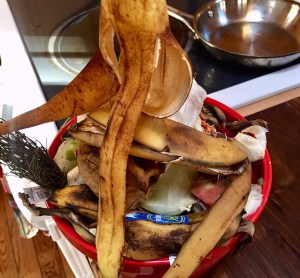
Words to the Wise: If you have curious fur babies who tend to follow their noses, then you need to be careful with compost. I have caught Winston digging up plants and looking for scraps of compost…now this can be slightly prevented by frequently mixing/turning your compost; however, I now…
1. Make sure Winston is inside while I’m fertilizing. Out of sight, out of mind.
2. Off bounds. I show it to him and tell him NO. It’s the effort that counts.
3. Mix dirt with compost. Most of the compost that Winston tried to eat was due to the compost not being completely broken down.
4. Pray to the good Lord to keep Winston away from my flowers/vegetables.
If you are in need of quick and ready compost, then make sure you’re mixing and turning the items in your compost weekly or bi-weekly. To be honest, there were times where I never touched the thing and the compost still came out amazing. Compost will provide love and nutrients to your house plants, veggie babies, as well as your lawn.
Save on the wallet.
Give energy back to the Earth.
Reduce waste.
Compost ya’ll.
 southernrusticliving